
ELIXIR BLANC SERUM
How to Fix Dry Skin That Never Stays Hydrated (Even After Moisturizing)
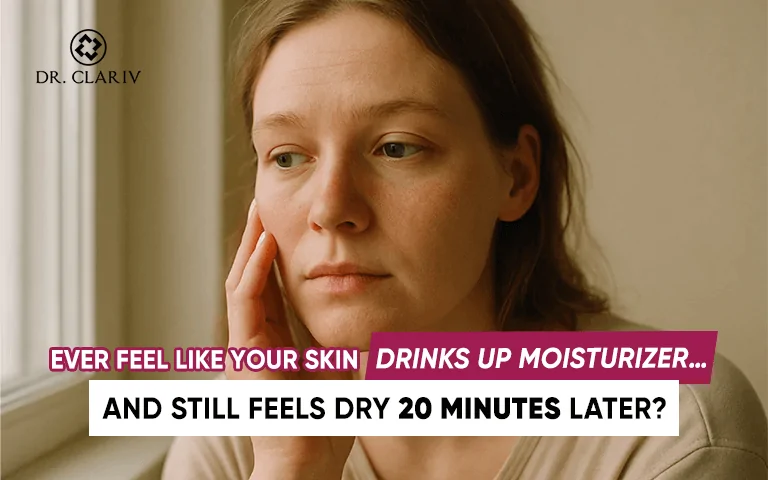
Dry skin can feel impossible to fix sometimes.
Have you ever felt like no matter what you put on your face… it just drinks it all up and stays dry?
You’re not alone.
Millions of people — especially those with sensitive or mature skin — struggle with dry skin every single day.
You use moisturizers, serums, toners, creams… and yet, 20 minutes later, your face feels tight again.
Here’s the truth:
It’s not your moisturizer’s fault — it’s your skin barrier silently crying for help.
Step 1: Understand What’s Really Going On With Dry Skin
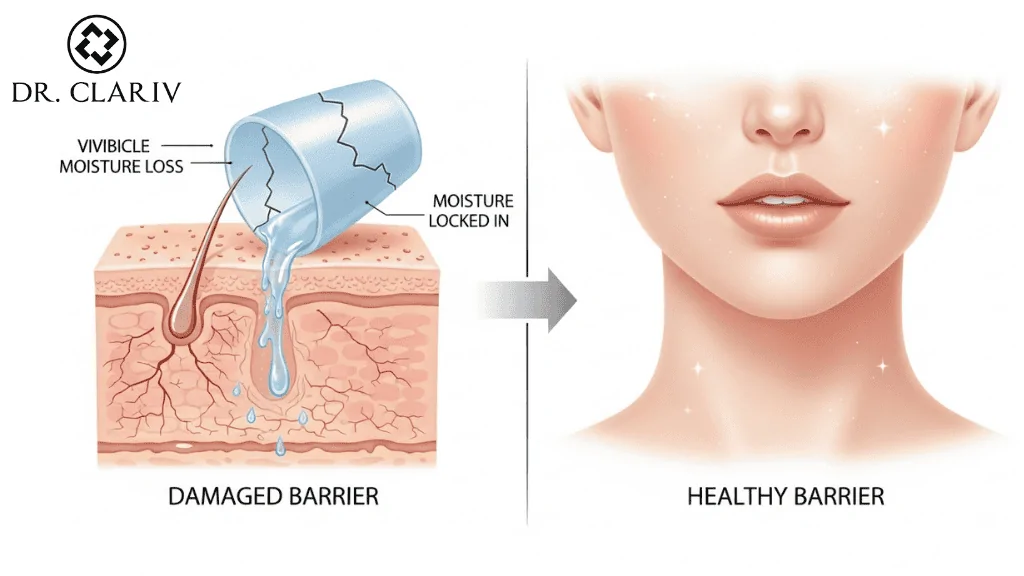
Your skin barrier acts like a wall that locks in hydration and keeps irritants out.
When that wall is damaged (due to over-cleansing, harsh exfoliants, or cold weather),
water escapes — leaving your skin dry no matter how much you moisturize.
Think of it this way:
You’re pouring water into a cracked cup — it keeps leaking until you fix the cup itself.
Signs your skin barrier is damaged:
- Tightness or flaking
- Redness or sensitivity
- Makeup looks patchy
- Stinging when applying new products
Step 2: Stop Overloading Your Dry Skin
When skin feels dry, most people add more: heavier creams, extra layers, stronger actives.
But doing more can make things worse — you’re overwhelming your skin instead of helping it.
Simplify your routine:
- Gentle cleanser
- Lightweight hydrating serum
- Simple moisturizer
- SPF in the morning
That’s it. Your skin doesn’t need a war. It needs rest.

Step 3: Use Ingredients That Teach Dry Skin to Hold Water
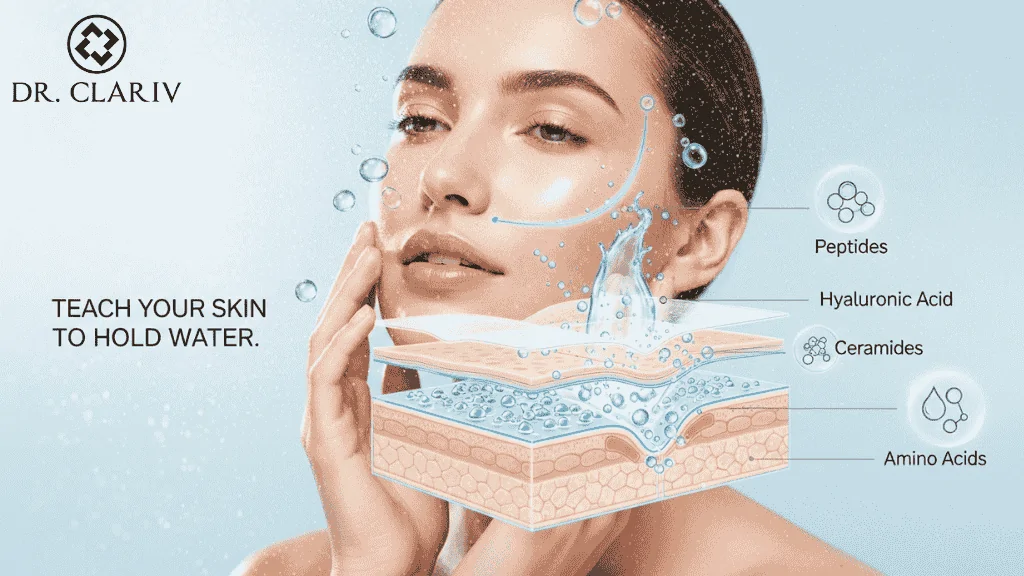
Real hydration isn’t about coating your skin — it’s about rebuilding its ability to stay hydrated from within.
Look for ingredients that mimic your skin’s natural moisture factors:
Peptides: strengthen the barrier and improve elasticity.
Hyaluronic acid: draws water deep into the skin.
Ceramides & amino acids: repair micro-cracks and keep moisture sealed.
These ingredients don’t just hydrate; they re-educate your skin to work properly again.
Step 4: Apply Hydration the Smart Way for Dry Skin
Timing matters.
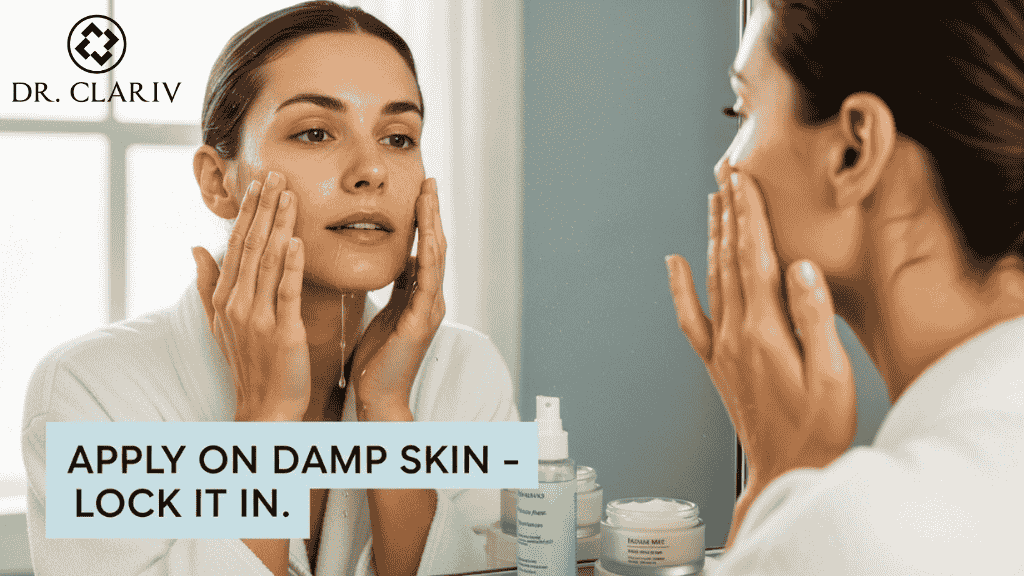
Apply your hydrating products right after cleansing, when your skin is still slightly damp —
this helps seal in water instead of losing it.
Follow with a thin moisturizer that locks everything in, without suffocating your skin.
If you’re indoors all day, you can mist lightly every few hours to maintain balance.
Step 5: Give Dry Skin Time (And Be Kind to Your Skin)
Your skin didn’t become dry overnight — and it won’t heal overnight either.
But within 7–10 days of gentle care, you’ll start noticing:
- softer texture
- less redness
- a calm, balanced feeling you might not have felt in years.
When your skin starts healing, it feels… peaceful.
And that’s when hydration finally lasts — because your skin knows how to keep it.

In Short:
| Problem | Why It Happens | What Actually Works |
| Dry skin even after moisturizing | Damaged barrier, over-cleansing | Gentle hydration & barrier repair |
| Tightness and redness | Overuse of acids, harsh ingredients | Simplify routine, use peptides |
| Flaky, uneven texture | Loss of natural oils | Hyaluronic acid + ceramides |
| Moisturizer “sits on top” | Weak barrier unable to absorb | Hydration right after cleansing |
Final Thought
You don’t need more products.
You just need the right kind of care — calm, consistent, and kind.
Because when your skin finally feels safe again,
it’ll do what it was meant to do all along:
stay hydrated, smooth, and quietly confident.